Timing Outdoor Live Events in the Gulf: Climate Cycles and Production Reliability
Understanding the Gulf’s climate windows helps event technicians schedule outdoor audio, video, and lighting installations before extreme heat impacts hardware performance.
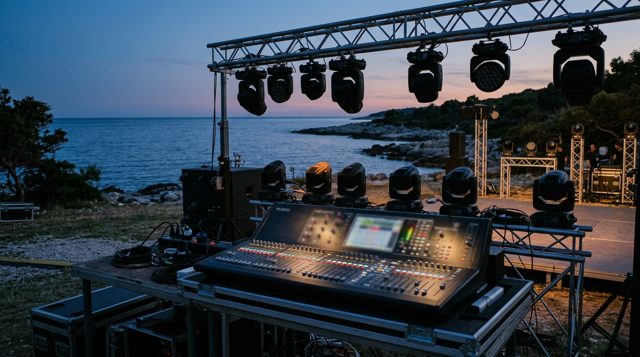
Thermal Constraints on Outdoor Event Equipment in the Gulf Region
Staging large-scale live events in the Arabian Gulf region requires careful planning around local meteorological conditions. High ambient temperatures, intense solar radiation, elevated humidity, and airborne dust particles directly affect the electrical and mechanical performance of event production hardware. During peak summer months, daytime temperatures frequently exceed 45°C in the shade, pushing outdoor electronics well beyond standard operational thresholds recommended by equipment manufacturers.
Excessive heat causes automated moving-head lighting fixtures to trigger thermal shutoffs to protect sensitive lamps, optical sensors, and LED engines from permanent damage. Large video screens constructed from modular LED panels experience color shifts and module blackouts when internal heat sinks cannot dissipate energy into warm surrounding air. Furthermore, power generation systems and high-output audio amplifiers must operate under severe stress, increasing the likelihood of voltage instability or thermal tripping during live outdoor performances.
Fine dust and salt vapor near coastal sites present additional operational hazards for sensitive production technology. Airborne sand particles penetrate cooling fans, clogging internal ventilation filters and accelerating physical component wear. For touring production crews and regional event managers, operating full-scale outdoor rigs during the summer introduces excessive hardware risks and demands costly auxiliary air-conditioning infrastructure.
Operational Windows Across the Autumn and Winter Season
The primary operational window for outdoor live event production across the Gulf opens as ambient temperatures moderate from late October through April. During this extended seasonal window, daytime temperatures typically hover between 22°C and 30°C, while nighttime temperatures drop to optimal operating ranges for delicate technical hardware.
Lower ambient heat allows automated stage lighting fixtures, media playback servers, and high-powered projection systems to run continuously within normal thermal limits without requiring external climate control enclosures. Sound engineers also observe more consistent acoustic behavior during these cooler months. Extreme temperature gradients—which cause high-frequency sound waves to refract upward or dissipate unpredictably—are less severe in moderate weather, allowing outdoor line arrays to project uniform sound coverage across large festival grounds.
Logistical efficiency improves during cooler months as well. Stage hands and technical crews can perform structural truss assembly, heavy cable runs, and overhead rigging without the severe physical risks associated with extreme heat exposure, leading to safer working environments during load-in and load-out phases.
Managing Shoreline Environmental Conditions and Offshore Site Visits
Waterfront production sites present distinct acoustic and visual parameters for live event designers. Atmospheric density near coastal areas alters how sound propagates across open bays, while water reflections influence the visibility of ground-mounted laser arrays and architectural illumination. Conducting thorough site inspections along coastal corridors provides vital data regarding ambient light contamination and structural coverage before finalizing stage plots.
When production teams plan waterfront setups in Dubai or evaluate sightlines around offshore landmarks near the Burj Al Arab, a brief water transit is often required to assess coverage angles. For crew coordination or client site reviews, securing an hourly charter provides direct access to coastal waters; visitors reviewing budget-friendly booking options for Suhail Yachting can consult the overview for current rental deals and rates across their fleet. Observing sound barrier reflection and light dispersion directly from offshore channels gives technicians empirical data before rigging structural trusses.
Wind behavior along the shore also impacts rigging safety parameters. Winter weather systems can sometimes bring sudden coastal wind gusts, requiring real-time anemometer monitoring on temporary outdoor roof structures and ground-supported LED walls. Combining seasonal planning with accurate offshore environmental data ensures structural safety for complex waterfront productions.
Aligning Technical Logistics with Seasonal Weather Patterns
Successful live event execution in the Gulf relies on matching production schedules with environmental realities. Event production firms that schedule outdoor festivals, televised ceremonies, and corporate stage builds between late autumn and early spring benefit from enhanced hardware stability, lower energy demands for auxiliary cooling, and safer working conditions for technical crews.
By integrating ambient temperature, humidity, and coastal atmospheric factors into initial planning, project managers preserve long-term gear reliability while delivering clear audio, video, and lighting performance. Coordinating equipment deployment with favorable weather windows remains a primary factor in maintaining technical standards across regional event operations.
Related: Pittsburgh Penguins Opens Season with Visual Punch from Robe Cyclone Fixtures · General